Prurigo nodularis
Prurigo nodularis is a skin condition characterised by intense itching and inflamed, nodular skin lesions.

For a long time, the condition was considered difficult to treat. Today, more is known about the causes of chronic itching, and for the first time targeted treatments are now available. Professor Marie-Charlotte Brüggen, MD, Senior Consultant at the Department of Dermatology at University Hospital Zurich, explains the causes, symptoms and treatment options for prurigo nodularis. She also discusses what the new research findings and treatments mean for people affected by the condition.
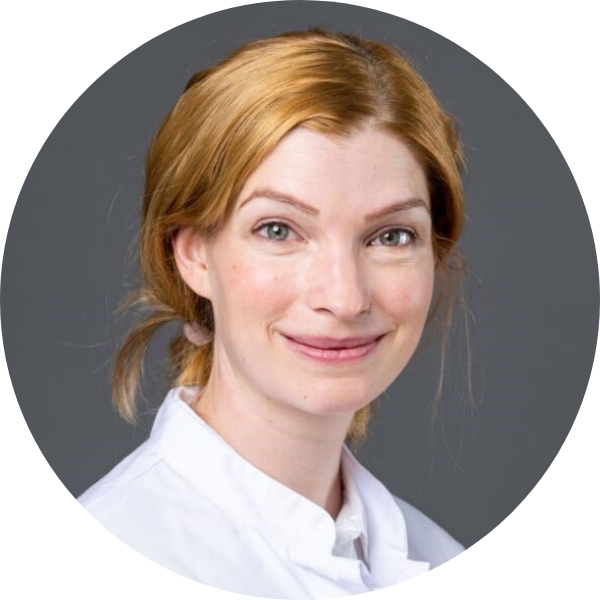
Prof. Marie-Charlotte Brüggen, MD
Head physician, Department of Dermatology, University Hospital Zurich
Understanding prurigo nodularis
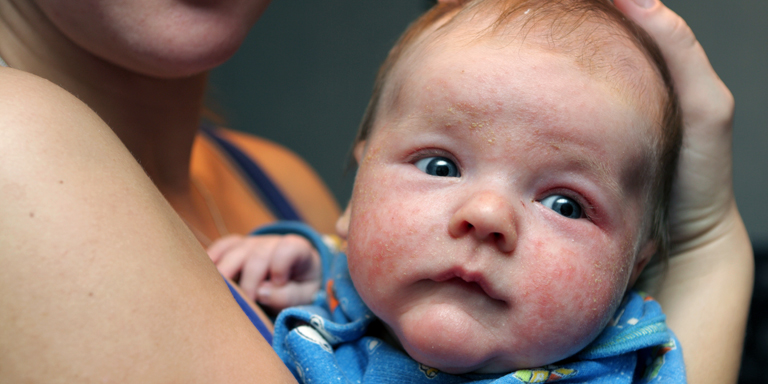
Prurigo nodularis and atopic eczema, also known as atopic dermatitis or neurodermatitis, are inflammatory skin conditions associated with severe itching. People with atopic eczema can develop prurigo nodularis. Chronic itching and frequent scratching can lead to the formation of nodular skin lesions. Both conditions are inflammatory in nature and are influenced by similar immunological mechanisms.
The main symptoms of this chronic skin condition are severe itching and numerous nodular skin lesions. These can affect large areas of skin all over the body, particularly the areas that are easy to reach and scratch. In addition to itching, other symptoms such as pain, burning and stinging are common. Prurigo nodularis is regarded as the skin condition associated with the most intense form of itching. People affected often describe the itching as the most distressing aspect of the condition.
Prurigo nodularis most commonly occurs in adults between the ages of 40 and 70. Women are affected slightly more often. The prevalence varies considerably between countries. In our part of the world, it is estimated thataround 100 out of 100,000 people are affected.
The cause of prurigo nodularis is not yet fully understood. However, the nodular skin lesions are only the visible part of the condition. Research suggests that there is a disruption in the interaction between the nervous and the immune system, which ultimately leads to the severe itching. Various immune cells are involved in this process. The skin lesions develop as a result of the constant scratching, which is triggered by the persistent itching.
People with atopic eczema have an increased risk of developing prurigo nodularis. Chronic itching and frequent scratching can lead to the formation of nodular skin lesions. Both conditions are inflammatory in nature and may be caused by similar immune defence mechanisms. Early and effective treatment of atopic eczema can help reduce the risk of developing prurigo nodularis.
The diagnosis of prurigo nodularis is initially based on a clinical assessment of the skin. It is important to take a detailed medical history in order to identify possible triggers and associated conditions such as atopic eczema or allergies. Skin or blood tests can help rule out other skin conditions and assess inflammation. The itching and its impact on the person’s quality of life are also evaluated. In some cases, a tissue sample, or biopsy, may be required to confirm the diagnosis and rule out other skin conditions.
Treatment and new developments
A range of treatment options is available. These include topical treatments applied directly to the skin, particularly anti-inflammatory treatments such as corticosteroids and calcineurin inhibitors. Systemic treatments taken in tablet form may include antihistamines, immunomodulators or neuromodulatory medicines. Newer approaches include injectable medicines. These biological medicines are antibodies that block inflammatory and itch-promoting signalling substances or their receptors. In this way, they can reduce itching.
In addition to medication, ultraviolet light therapy can help relieve symptoms, as it has an anti-inflammatory effect and may reduce itching. Psychosocial treatment approaches can also help people cope more effectively with chronic itching and stress factors. Therapy can provide coping strategies and significantly improve quality of life.
Prurigo nodularis is now understood to be a neuroimmune condition involving a complex interaction between the nervous system, the immune system and skin tissue. This understanding enables more targeted treatment approaches. IL-31 in particular has been identified as a key cytokine that promotes itching, inflammation and nerve growth. Different subtypes of the condition, with varying inflammatory profiles, have also been identified.
Today, targeted medicines are available in addition to treatments that relieve symptoms. These medicines act directly on the mechanisms responsible for inflammation and itching and can relieve symptoms in suitable patients. Antibodies, also known as biological medicines, specifically block certain signalling substances involved in inflammation and itching. This represents a major advance in the treatment of prurigo nodularis.
Research is focusing on tailoring treatment more closely to individual patients. The aim is to gain a better understanding of which inflammatory processes are involved in different people. This could allow treatments to be used more selectively in the future and symptoms to be relieved more effectively.
Living with prurigo nodularis
People with prurigo nodularis face a range of challenges. These include chronic itching, which can lead to severe skin damage through frequent scratching. This can affect not only the skin but also significantly reduce quality of life. Many people experience sleep problems, anxiety and depression.
Prurigo nodularis is now recognised as a distinct condition and is much better understood than it was in the past. Newly approved biological medicines provide effective treatments that can significantly improve itching, skin lesions and sleep problems, while enhancing quality of life. The condition places a considerable burden on those affected due to intense itching, sleep disturbance and psychological distress. Early diagnosis and specialised dermatological care are essential to ensure timely access to modern treatment options.
- Apply a moisturising skincare product regularly. This helps strengthen the skin barrier and can help relieve itching. Keeping the product in the fridge provides an additional cooling effect and can soothe itching.
- Various measures can provide relief from acute itching. These include applying cool compresses, a chilled spoon or a cold pack wrapped in a cloth to the affected area. Itchy areas can also be held under cold running water and moisturised afterwards as usual.
- Sweating can make itching worse. It is therefore advisable not to use overly warm bedding at night and to wear clothing suited to the temperature during the day.
- Relaxation techniques, such as yoga, progressive muscle relaxation or autogenic training, can help people cope with severe itching and the strain caused by the condition.
- Regular medical check-ups with a dermatologist help ensure that treatment can be adjusted when necessary and that possible complications are identified at an early stage. Psychological support may also be helpful in cases of significant emotional distress.
Editors: aha! Swiss Allergy Centre in co-operation with the Scientific Advisory Board.
Final revision of the website content: 27.07.2026
We thank you for your support

Free consultation
for affected persons & relatives
Summer break: 20.07.–02.08.