House dust mite allergy
House dust mites live in homes and offices all year round. Their tiny droppings can trigger sneezing, a blocked nose or even asthma in allergy sufferers.
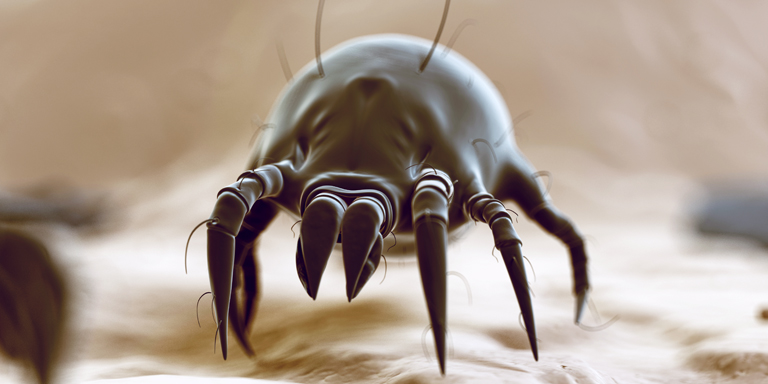
Table of contents:
Triggers
House dust mites are not visible to the naked eye. They feed on animal and human skin flakes. They thrive in warm, humid environments – especially in beds. The main allergens are found in their bodies and faeces, a significant component of household dust.
Symptoms
Symptoms can occur throughout the year, especially at night or early in the morning.
Typical signs include:
- sneezing fits
- runny or blocked nose
- itchy, red or watery eyes
Allergic asthma may also develop. Warning signs include:
- coughing
- wheezing
- tightness in the chest
In people with atopic eczema (neurodermatitis), contact with house dust mites can worsen the condition. Inflammation and itching may become more intense, making treatment more demanding.
Diagnosis
Diagnosis is based on a detailed medical history and various tests.
- The symptoms are recorded in detail when taking the patient´s medical history.
- Skin tests (prick tests) and/or blood tests (IgE) may be carried out by a doctor or allergy specialist. The results must always be interpreted together with the medical history.
Treatment
As with all respiratory allergies, treatment is based on three pillars:
Avoiding allergens
Measures must be applied consistently to reduce exposure to house dust mites and relieve symptoms – especially in the bedroom. Special mite-proof encasings (covers) are key.
Medication
- Antihistamines in the form of tablets, syrups, sprays or nasal drops help relieve typical symptoms such as sneezing, a runny nose and itchy eyes.
- Corticosteroid preparations applied locally – such as nasal sprays – may be also prescribed to control inflammation.
- For allergic asthma: bronchodilators and/or inhaled corticosteroids as prescribed by a doctor.
Allergen-specific immunotherapy (desensitisation)
Recommended when medication is inadequate or to prevent complications such as the development of allergic asthma. It is prescribed by an allergy specialist and targets the underlying cause of the allergy.
For more information, see: Treatment of respiratory allergies
Tips to reduce house dust mite exposure
- Use mite-proof encasings (covers) for mattresses, pillows and duvets. Products with the Allergy Seal of Quality are particularly suitable.
- Keep room temperature cool (18–20°C).
- Maintain relative humidity at a maximum of 50%.
- Ventilate rooms daily (5–10 minutes, three times a day).
- Wash pillowcases, duvet covers and pyjamas regularly at 60°C.
- Use a vacuum cleaner with a HEPA filter and wipe surfaces with a damp cloth.
- Reduce dust traps (soft toys, carpets, non-washable curtains, upholstered furniture).
Facts and figures
- In Switzerland, around 6 percent of the population have a reaction to house dust mites.
- Symptoms may occur throughout the year.
- An allergy can develop at any age.
- Around 40,000 mite species exist worldwide.
- In our climate, two main species trigger most allergies.
Frequently asked questions
No. The goal is not “zero mites”, but significantly reducing exposure.
These covers are placed directly on the mattress, pillow and duvet. Regular bedding goes on top. They are washed according to the manufacturer’s instructions, usually once or twice a year. Regular bedding (fitted sheets, pillowcases, duvet covers, etc.) must be washed more frequently.
In Switzerland, mite-proof encasings (covers) are not included in the compulsory basic health insurance benefits. However, some supplementary insurance policies cover part of the costs.
The main exposure occurs in the bed. Therefore, mite-proof covers for the mattress, pillow and duvet are crucial. In the rest of the living area, textiles do not need to be removed entirely. Regular cleaning (washing at 60°C, vacuuming with HEPA filter) already reduces exposure significantly.
Editors: aha! Swiss Allergy Centre in co-operation with the Scientific Advisory Board.
Last update of website content: December 1, 2025
Table of contents:
Free consultation
for affected persons & relatives