Allergic asthma
Allergic asthma is a common form of asthma that is triggered by contact with an allergen.

Table of contents:
In people affected, the immune system overreacts to normally harmless substances such as pollen, house dust mites or animal dander. This reaction causes inflammation of the bronchi, narrowing of the airways and increased mucus production. This can lead to typical symptoms such as coughing, wheezing, shortness of breath or chest tightness.
Triggers
In allergic asthma, symptoms are triggered by allergens. In some cases, however, other factors can also cause asthma attacks or make symptoms worse, such as viral infections, physical exertion, exposure to smoke or cold temperatures. This is known as mixed asthma. Often, an asthma attack is not caused by a single trigger but by a combination of several factors.
The main triggers of allergic asthma are:
- pollen (from trees, grasses and herbs)
- house dust mites
- animal dander (e.g. cats, dogs, horses, rodents)
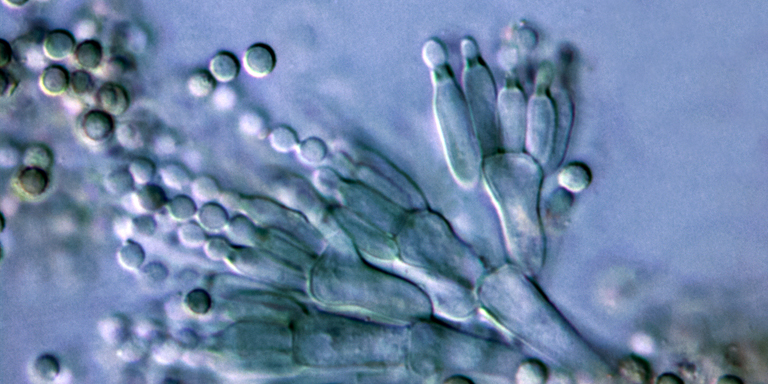
- moulds (e.g. Alternaria alternata, Cladosporium herbarum)
Other triggers can vary from person to person. Which factors cause symptoms depends, among other things, on how sensitive the bronchi are, how well the asthma is controlled and the exposures a person encounters in everyday life, for example at work or through regular exposure to passive smoking.
Other possible triggers include:
- respiratory infections
- physical exertion
- cold air and sudden changes in temperature
- smoke (tobacco, wood-burning heating systems) and irritating particles (e.g. dust or flour)
- air pollution
- strong smells and irritating substances (e.g. perfume or cleaning products)
- stress or strong emotions (laughing, crying, fear)
Symptoms
In allergic asthma, symptoms usually occur after contact with an allergen. The type and severity of symptoms can vary from person to person.
- shortness of breath
- wheezing
- chest tightness
- coughing (often dry)
The severity of symptoms can also vary over time. In some people, they may suddenly become worse and cause an asthma attack with severe shortness of breath.
Wheezing and coughing are common in young children. Around one in three children can develop an obstructive bronchitis at least once before their third birthday. Most commonly triggered by a viral infection, the airways narrow causing the child to cough, wheeze or experience difficulty breathing.
Many children experience several such episodes during the pre-school years. In the majority of cases, the symptoms disappear as they get older. Obstructive bronchitis therefore does not automatically mean that a child has asthma. In a small proportion of children, however, repeated symptoms may indicate asthma in early childhood.
Medical assessment is particularly important if the symptoms occur frequently, also arise without a cold, disturb the child at night or restrict their activity. The doctor will decide whether further investigations or treatment is necessary.
Allergic asthma is also frequently associated with allergic rhinitis (hay fever). Typical symptoms include repeated sneezing, a blocked or runny nose and red, irritated and watery eyes.
Diagnosis
A diagnosis of allergic asthma is based on several elements. In school-age children, adolescents and adults, objective investigations are required, particularly a lung function test. Depending on the findings, further tests may be necessary. In pre-school children, such investigations often cannot yet be carried out reliably. The diagnosis is therefore based mainly on the symptoms, medical history, medical examination and how the condition develops over time. An improvement during a time-limited course of treatment may indicate asthma, but cannot confirm the diagnosis on its own.
Diagnosis begins with a detailed discussion of the person’s medical history. This covers the symptoms, how they have developed and the situations in which they occur. Possible exposures in everyday life or at work are also considered in order to determine whether certain allergens may trigger or exacerbate the symptoms.
Lung function can be measured using a test called spirometry. This test can be carried out in a GP or paediatric practice or by a specialist in respiratory medicine or allergology.
The person breathes out into a measuring device that records the amount of air exhaled and the speed of the airflow. These measurements can be used to identify possible narrowing of the bronchi.
The test is painless and takes only a few minutes, but requires the instructions to be followed carefully. For this reason, it is only rarely performed in children under the age of 5.
The test is often repeated after inhaling medication to check whether the narrowing of the bronchi is reversible, which is typical of asthma.
If spirometry results are normal but asthma is still suspected, further investigations may be useful, such as measuring fractional exhaled nitric oxide (FeNO) or carrying out a bronchial provocation test. In children and adolescents between the ages of 5 and 16, FeNO measurement is part of the recommended assessment for asthma regardless of the spirometry result.
Skin tests (skin prick tests) and/or blood tests to measure specific IgE antibodies can be carried out to identify the allergens that may be responsible for the symptoms.
The tests help to classify the form of asthma more precisely and to plan suitable preventive measures. In pre-school children, they are part of the basic diagnostic assessment and should be carried out regardless of age. The widespread belief that a child is “too young to be tested” is incorrect.
Allergic asthma is diagnosed when three conditions are met: asthma is present, the immune system reacts to a specific allergen and the symptoms occur in connection with contact with that allergen.
Treatment
Allergic asthma is a chronic condition. However, with appropriate treatment and knowledge of personal triggers, symptoms can usually be well controlled, allowing affected individuals to lead a normal life.
The aim of treatment is to prevent asthma attacks, maintain quality of life and keep the condition well controlled in the longterm.
Available in German, French and Italian
Medication treatment for asthma helps prevent symptoms and relieve them when they occur. It also reduces the risk of asthma attacks.
Treatment is tailored to the individual. The doctor determines which medication should be used, when and how often.
Important: short-acting emergency or reliever medication alone is not sufficient for asthma. An inhaled medication to treat inflammation in the airways is also required.
Maintenance treatment targets inflammation in the airways. It usually contains an inhaled corticosteroid.
Depending on the prescribed medication, it is used daily, even when there are no symptoms, or taken as needed. In some cases, the same inhaler is used both for maintenance treatment and for the rapid relief of symptoms.
Good to know: if asthma remains inadequately controlled despite treatment, the doctor may prescribe additional medication. In severe asthma, biologics may be considered.
These medications target specific mechanisms of the immune system and are administered by injection.
Biosimilars of certain biologics have also been available for some time. They often provide a less expensive treatment alternative and are comparable with the corresponding original medications in terms of effectiveness and safety.
Reliever medication quickly eases symptoms such as coughing, wheezing or shortness of breath. On medical advice, it can also be used before physical exertion.
Which medication is used for this purpose depends on the treatment prescribed. Medical instructions should always be followed.
Good to know: needing reliever medication frequently may indicate that the asthma is not adequately controlled. In this case, a medical review of the treatment and inhalation technique is recommended.
If symptoms worsen rapidly or the reliever medication does not work as usual, medical help should be sought immediately.
Allergies can trigger or exacerbate asthma. It is therefore important to treat the associated symptoms as well, particularly those of allergic rhinitis.
More about “Treatment of respiratory allergies”
For some people, allergen-specific immunotherapy, also known as desensitisation, may be considered following medical assessment. The asthma must be well controlled for this treatment.
In addition to medication, various measures can help improve asthma control in everyday life.
Avoiding allergens:
In allergic asthma, an important aim of treatment is to reduce contact with the allergens responsible for the symptoms as much as possible. These are known as allergen avoidance measures.
As a complement to medication treatment, these measures can help reduce symptoms and prevent exacerbations.
Which measures are appropriate depends on the relevant allergen, for example house dust mites, pollen, animal allergens or moulds.
It is not always possible to avoid allergens completely. In some people, reducing exposure may already help improve asthma control.
General measures:
Some general measures that are not specifically aimed at allergic asthma can help improve asthma control in everyday life and prevent exacerbations.
These include in particular:
- not smoking
- regular, appropriate physical exercise
Emergency
Children, adolescents and adults with asthma need immediate medical help if:
- shortness of breath means that they can only speak in individual words or short sentences
- the skin visibly pulls in between the ribs, below the rib cage or around the neck when breathing
- the lips or skin turn bluish
- reliever medication does not work or does not work as usual
- shortness of breath rapidly becomes worse
- the person affected appears unusually exhausted, drowsy or confused.
In babies and young children, difficulty drinking or speaking, pronounced flaring of the nostrils, unusual listlessness and visible pulling in of the skin when breathing are also warning signs.
Three tips
- Choose the appropriate inhalation device together with a healthcare professional. When children use a metered-dose inhaler, use a spacer and, for young children, an additional face mask. Use the inhaler correctly and as often as recommended by the doctor.
- Have your asthma checked by a doctor at least once a year, even if you have no symptoms. This allows the course of the condition to be monitored.
- Draw up a personal written action plan together with your attending doctor. It should explain how to recognise a deterioration or an asthma attack, what to do and how urgently medical help is needed. For children, make sure that the action plan and emergency medication are also available at school, at camp and during physical exercise lessons.
The aha!infoline provides free, straightforward personal advice and individual support.
You can also find more detailed information and practical tips in our brochure (in German, French, Italian), which you can order or download free of charge.
Instructional videos on the correct use of inhalation devices can be found, for example, on the websites of the Swiss Society of Paediatric Pneumology (SSPP) (in German, French) and the Swiss Lung Association (in German, French, Italian).
Facts and figures
- Asthma is a common chronic respiratory disease. In Switzerland, around 5 to 6% of the population is affected, with women affected slightly more often than men. In childhood, asthma is one of the most common chronic diseases and affects around 8 to 9% of children.
- Allergic rhinitis is one of several risk factors for developing asthma. People with allergic rhinitis have an increased risk of developing asthma compared to people without allergic rhinitis. Studies report an approximately three- to four-fold higher likelihood.
- Inadequately controlled asthma is a major risk factor for severe allergic reactions / anaphylaxis in children with food allergy.
Frequently asked questions
Allergic asthma is triggered by a reaction of the immune system to allergens such as pollen, house dust mites, animal dander or moulds.
In non-allergic asthma, these allergens are generally not the main triggers. Instead, other factors such as cold temperatures, respiratory infections, physical exertion or stress play a greater role.
There are also mixed forms of asthma. People affected react both to certain allergens and to other triggering factors.
Symptoms that occur or become worse on contact with allergens, for example during the pollen season or in the presence of a cat, may indicate allergic asthma.
Allergy tests and a medical assessment by a specialist can confirm the diagnosis.
Yes. Identifying and avoiding the triggering allergens as far as possible, using maintenance treatment regularly and having the asthma checked regularly can significantly reduce the risk of asthma attacks.
Yes, particularly if it is not treated adequately. Persistent inflammation of the airways can cause the bronchi to become more sensitive.
However, appropriate treatment and regular medical check-ups can help limit this development.
Yes. With well-adjusted treatment, the correct inhalation technique and appropriate treatment of accompanying allergies, most people affected can lead an active life, take part in sports and enjoy a good quality of life.
Editors: aha! Swiss Allergy Centre in co-operation with the Scientific Advisory Board.
Final revision of the website content: 14.10.2026
We would like to thank you for your support




Table of contents:
Free consultation
for affected persons & relatives